The Book That Writes Itself Twice: Why Honiton's Clubs Still Swear by Duplicate Pads
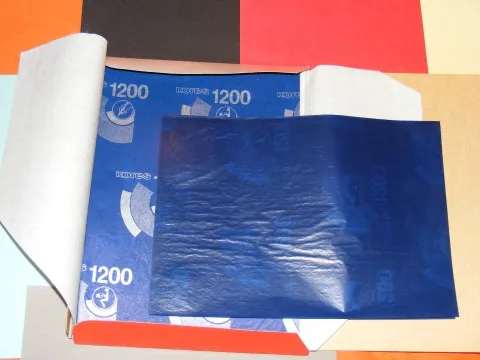
Photo: Emilian Robert Vicol from Com. Balanesti, Romania, CC BY 2.0, via Wikimedia Commons
There is a particular sound a duplicate book makes when you open it: the soft crackle of the gummed binding, the faint smell of the carbonless paper, the sense that whatever you write is going to be written twice whether you like it or not.
If you help run anything in Honiton — a school fair, a church raffle, a quiz night, an allotment society, a toddler group, a charity coffee morning — you have almost certainly owned one of these. And you have almost certainly lost the top copy at some point, or found a stub in a coat pocket in February that should have been in the envelope in November.
This is a small defence of the duplicate pad, and a few practical notes on making it behave.
Why the double copy still wins
A duplicate book solves one problem very neatly: it gives two people proof of the same transaction without either of them needing to trust the other's memory. The buyer keeps a stub, the seller keeps the book. Or the treasurer keeps the pink, the secretary keeps the yellow. Either way, the information exists in two places, and neither of them can be lost by dropping a phone in a puddle.
There is also something to be said for the visibility of it. At a village hall quiz night, a clipboard with a numbered sheet on it tells everyone exactly how many teams have signed up. There is no app to open, no password, no 'have you got the link'. It is on the table, in biro, and everyone can see it.
Choosing the right pad
Duplicate pads are not all the same, and a bit of thought before you buy saves a lot of squinting later.
Size. A5 is the workhorse for sign-up sheets, cash records and committee minutes. A6 fits in an apron pocket and suits raffles and tombola tickets. The long, thin thirds-A4 pads are ideal for lists of names that need to run down a page.
Two-part or three-part. Two parts cover most jobs: one for the customer, one for the club. Three-part pads are worth the extra for anything involving a treasurer, a secretary and a receipt — the third copy lives in the file and stops arguments in March.
Numbered or not. For raffles, buy the books with pre-printed sequential numbers. For everything else, numbering by hand is slower but lets you start a fresh series each year, which makes old stubs much easier to date.
Perforated stubs. Insist on them. A pad without perforations means tearing by hand, and torn edges are how you end up with a stub that says 'Ticke' and a book that says 't 47'.
Binding. Gummed along the top for a book that lies flat on a table. Spiral or wire for anything you will be holding in one hand.
Pens, pressure and the small stuff
Carbonless paper is fussy about what you write with. A firm ballpoint is perfect. Rollerballs and gel pens can skip, and pencil barely transfers at all — it will look fine on the top sheet and almost invisible underneath. Write with a bit of pressure and put a sheet of thin card or a folded leaflet behind the page so the impression carries cleanly.
Keep the book closed and flat when you are not writing in it. Duplicate pads that live in the bottom of a bag get dog-eared, and a dog-eared pad is a pad where the top copy tears off at an angle and the numbers stop matching.
The raffle
Number the stubs, sell in order, and keep the counterfoil book intact until the draw is done. Announce the winning number, then read the name from the stub. If the winner is not in the room, you have their name and a contact — write a phone number on the stub at the point of sale if the prize matters. Afterwards, staple the winning stub to the tally sheet and keep both with the minutes. Next year's organiser will thank you, and this year's treasurer will stop being asked awkward questions.
Sign-up sheets and the tea fund
For anything with a list of names, use the top copy on the clipboard and keep the duplicate in the book. When the sheet fills up, tear the top copy off and file it; do not tear both.
For the tea fund — the honest, slightly grubby cash tin that funds most of community life in this town — a duplicate pad does the work of a ledger. Date on the left, what it was for, money in, money out, and the total carried forward at the bottom of each page. Write the opening balance at the top of every page. It takes four seconds and it means you can hand the book to someone else in June and they can follow it.
A last word for the stub
There is a temptation, when the event is over, to tidy everything away at speed. Resist it for a fortnight. Put the duplicate book, the winning stubs and the cash sheet in a single envelope, write the date and the event on the front, and leave it somewhere sensible. That envelope is what turns a nice afternoon into a record — and it costs about forty pence.
We keep a range of duplicate pads and numbered raffle books on the shelf by the counter. If you are not sure which one suits a school fair or a church draw, bring the problem in and we will open a few so you can see how the pages behave before you commit. It is that sort of purchase.