The Kitchen Table Habit: Why a Local Paper Still Earns Its Place

Photo: folded local newspaper on a kitchen table beside a mug of tea and reading glasses, via thumbs.dreamstime.com
There's a moment, somewhere between the second cup of tea and the first proper look at the day, when the kitchen table does its best work. Phone face down. Paper open. Nothing beeping.
We sell a lot of local papers, and we've noticed something that doesn't fit the usual story about print. The people buying them aren't doing it out of stubbornness or a refusal to modernise. They're doing it because it works. So let's make the case properly, without the violins.
A read, not a scroll
The obvious difference is that a newspaper ends. You get to the bottom of the page, you turn it, and eventually you're done. There is no bottomless well to fall into, no algorithm deciding you'd like six more things like that, no comment section waiting to raise your blood pressure at 7.40am.
That matters more than we admit. Reading a printed page is a linear, unhurried act. You can't open a second tab. You can't check what someone said about it. You just read, and because you're reading properly, you remember it. Ask anyone who reads a weekly what was in it and they'll tell you. Ask someone who scrolled for twenty minutes and you'll get a vague shrug.
There's also the physical pleasure of it — the rustle, the fold, the way a broadsheet sheet resists being read one-handed over a bowl of porridge. Small things. But we are physical creatures and we notice them.
The news that doesn't make it online
Here's the practical bit. A local paper carries the stuff that never trends.
Planning applications for the field at the end of your road. A bus route changing. The library's new opening hours. A road closure that will affect the school run for a fortnight. The results of the parish council vote nobody livestreamed. A thank-you from the fundraiser that raised £1,400 for a family in the next village. A photograph of a Year 6 class that will be cut out and stuck on a fridge within the hour.
None of that will ever be the subject of a push notification. All of it affects how your week goes. That's the honest bargain of a local paper: it's not exciting, it's useful.
The counter is part of the ritual
Buying it matters too, and not in a sentimental way. The paper shop counter is one of the last places in town where you'll have a short, unplanned conversation with somebody you didn't arrange to meet.
You'll hear that the road past the church is shut. You'll find out someone's had their baby. You'll be told, whether you asked or not, that the hanging baskets look a state this year. It takes ninety seconds and it's the opposite of a notification — it's information with a face attached, arriving at a human pace, from someone who has no reason to exaggerate.
That's not a small thing in a town like Honiton. It's how a place keeps tabs on itself.
Then it gets passed on
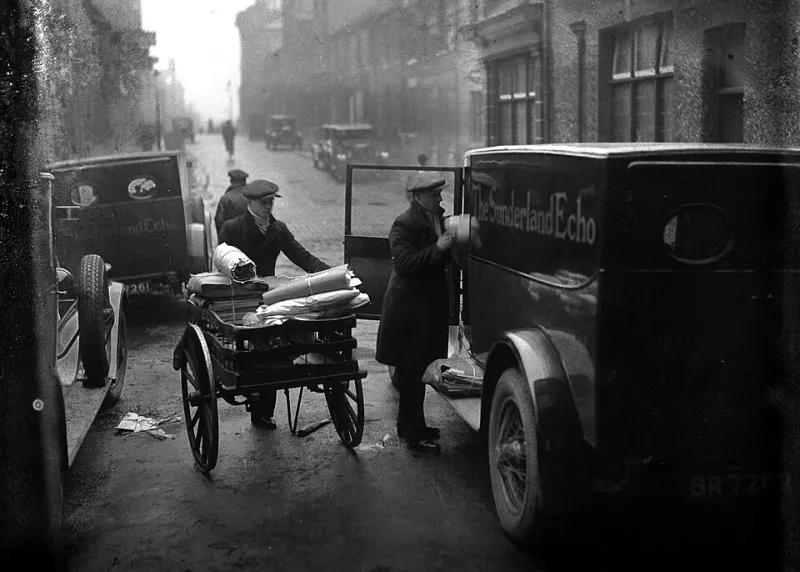
A local paper is one of the few things people still share without being asked. It goes to a neighbour when you've finished. It gets taken to an older relative on a Sunday. It sits in a café or a waiting room and gets read four times over. Someone cuts out the bit about the grandson's football team and posts it through a letterbox.
Compare that with a link. A link gets forwarded, ignored, and forgotten by lunchtime. A paper gets handled, folded, annotated in biro and physically relocated. It travels further than you'd think.
The sharing is often the point. A lot of what we sell on a Friday is bought by one person on behalf of two or three others, and that's been true for decades.
The stumbling block is habit, not money
The usual objection is that it costs money and it's old-fashioned. On price, it's cheaper than most of what we buy without thinking — a paper costs less than a takeaway coffee and lasts roughly twenty times as long. On the old-fashioned charge, we'd push back. A paper is old-fashioned the way a kettle is old-fashioned. It does exactly what it's meant to, every time, with no updates.
The real obstacle is simply that it isn't in the routine any more. So here's a gentle suggestion, offered without any obligation: pick one day a week. Buy it on the way past. Read it at the table with something hot. Cut out one thing worth keeping. Pass it on when you're done.
Do that four times and it stops being a decision and becomes a habit — the sort that gives a week a bit of shape.
Why we keep the shelf stocked
Some things on our shelves are seasonal. Cards come and go, school supplies surge and settle, Christmas is its own weather system. The papers are different. They're the steady heartbeat of the place, the reason the door swings open at half seven on a Friday and half the town says good morning.
If you've drifted out of the habit, come back to it. If you've never had it, try one week. The kettle's on and the shelf is full — and there's usually a copy with your name on it, even if you have to ask us to put one by.