The Shoebox Archive: Starting a Honiton Newspaper Clipping File That Lasts
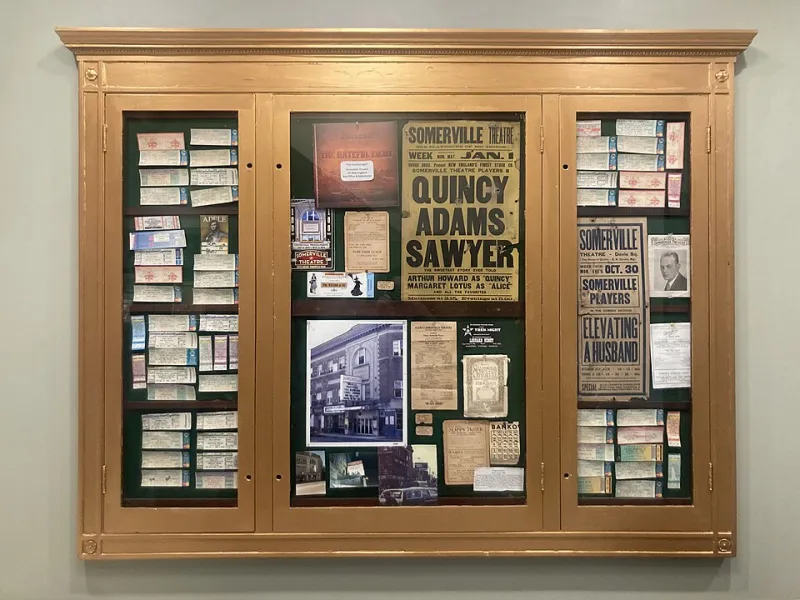
Photo: Mattsjc, CC BY-SA 4.0, via Wikimedia Commons
There is a drawer in many Honiton homes that nobody quite planned. Open it and you'll find a parish newsletter from years back, a photo of a grandchild in the paper, a cutting about a shop that used to be on the high street, and perhaps a wedding announcement folded into quarters. It is not an archive in any formal sense. It is a shoebox of instincts — the feeling that some things are too local to let slip away.
That instinct is worth taking seriously. Not because every clipping is precious, but because together they form a kind of informal record of Honiton: the small moments that never make it into a history book. A clipping file is cheap to start, easy to keep going, and surprisingly good at pulling a community's memory into focus.
Why a clipping file still earns its keep
Newspapers are good at the first draft of local history. They record names, dates, places and the odd detail that makes a story human: who cut the ribbon, which road was closed, what the weather did on carnival day. A lot of that material is not neatly searchable online, and some of it disappears when websites are redesigned or archives move behind a login. A clipping is a physical copy you can hold, label and pass round the kitchen table.
There is also something quietly democratic about it. You do not need permission to start a clipping file. You do not need a grant or a committee. You need a pair of scissors, a folder and a rough idea of what matters to you. The result is not official history; it is neighbourly history. And for a town like Honiton, that is often the version people actually remember.
What deserves a second life
The first temptation is to keep everything. Resist it. A clipping file works best when it is selective enough to browse.
Start with the obvious: births, marriages, deaths and significant anniversaries. Then add the local life that would otherwise fade — school achievements, sporting results, charity fundraisers, church and chapel notices, club anniversaries, shop openings and closures, planning stories that changed a street, and photographs of events that brought people together. If a cutting has a name, a date and a place, it is usually worth a second look.
What can go? Whole newspapers you never got round to reading, duplicate copies of the same notice, and anything so badly torn that the sense has gone. If you are unsure, put it in a "maybe" wallet for a month. If you have not gone back to it, recycle it. The aim is a file you will actually use, not a paper mountain with a lid on.
A simple system that won't collapse
A clipping drawer fails when it becomes a loose pile. A clipping file survives when it has a route. Try this four-part system:
- A weekly wallet. Keep a single manila folder or plastic document wallet by the chair where you read the paper. Anything worth keeping goes in there during the week. No cutting yet — just catch it.
- A binder or archive box. Once a week, spend ten minutes cutting and filing. A4 ring binders with punched pockets are easy to flip through. A lidded archive box is better if you have larger cuttings or want to keep whole supplements.
- A plain notebook as an index. Write the date, the headline and the page or subject. This sounds fussy, but it takes seconds and turns a pile of scraps into something you can search without tipping everything onto the floor.
- A pencil and a few labels. Write the date and newspaper title lightly on the back of each cutting, or on a small slip tucked into the pocket. Pencil is forgiving. Ink can bleed or look permanent before you have decided where a story belongs.
Keep the categories broad: family notices, school and youth, community events, local business, sport, and maybe "odd bits" for the stories that resist a label. Store the file somewhere dry and dark — a cupboard rather than a sunny windowsill or a damp loft. Avoid laminating anything you might want to handle or scan later. A plain punched pocket is usually enough.
The kit you can carry home
This is where a proper paper shop still makes practical sense. You can buy a ring binder online, but you cannot feel whether the rings close squarely or whether the pockets are the right weight. At Honiton Paper Shop, the basics for a clipping file are the sort of things a high street stationer has always stocked: A4 ring binders, packs of punched pockets, manila folders, document wallets, archive boxes, index cards, plain notebooks, pencils and labels.
Ask for acid-free or archive-friendly sleeves if you are keeping something precious for the long term. For everyday family cuttings, standard punched pockets are fine. The main thing is to get the paper out of the carrier bag and into a system before it creases.
Start with ten minutes this weekend
You do not need to begin with the whole drawer. Take one folder, one binder and one pencil. Pull out five cuttings. Label them with the date and the paper if you know it. Slip them into pockets. Write three lines in the notebook. That is a clipping file.
Next week, add another five. Tell a neighbour what you are doing. Someone will mention a wedding photo they have been meaning to save, or a school report from decades ago, and the file will start to grow in a way that feels natural rather than administrative.
The point isn't a perfect archive
A clipping file is not a museum. It is a household habit — a way of saying that local stories deserve more than a week in the recycling. It will have gaps. It will reflect your interests, your family and the papers you happen to read. That is fine. The value is in the keeping, not the completeness.
Years from now, someone will open that drawer and find a version of Honiton that no search engine holds: the faces, the small print, the ordinary Saturdays. And it will have started with a pair of scissors and a folder from the paper shop.