The Glossy Doorway: Why Honiton’s Magazine Rack Is November’s Best Small Escape
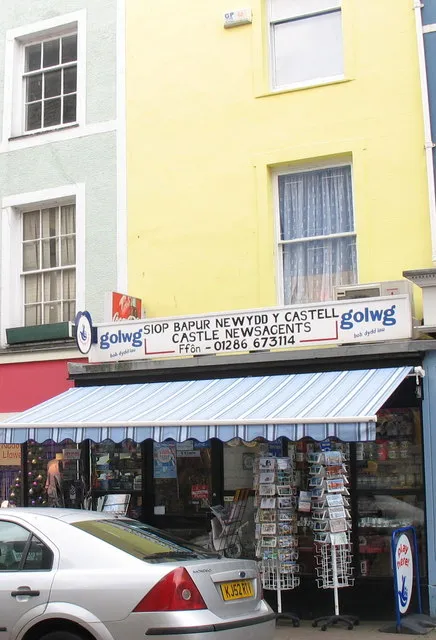
Photo: Eric Jones, CC BY-SA 2.0, via Wikimedia Commons
By half past four, Honiton has that November look about it. The sky is a flat grey purse, the pavements have started to shine, and the shop windows are doing that thing where they reflect both the streetlights and your own slightly tired face. You pop in for a paper, or a birthday card, or because you have convinced yourself you need a new pen. And then you drift, as you do, towards the rack by the door.
That rack is a quiet little travel agent. For the price of a coffee and a biscuit, it will send you to a Devon garden in June, a Roman fort in Northumberland, or a kitchen table in a cottage where someone is calmly making marmalade. No suitcase. No rail replacement bus. No asking anyone to water the plants. Just a glossy rectangle and an hour that belongs to you.
A Small Holiday by the Door
At the counter on a damp Tuesday, a customer picked up a gardening monthly, put it down, picked up a history glossy, and then stood there looking like a woman choosing between two slightly risky sandwiches. “I don’t want a whole holiday,” she said. “I want an hour where nobody asks me what’s for tea.”
That is the entire brief, really. The magazine rack is not an escape from Honiton. It is an escape that starts in Honiton, in a warm shop that smells faintly of paper and printer’s ink, and ends in an armchair with the radiator ticking. You do not need to book annual leave. You do not need to find a cat sitter. You need four pounds and a willingness to ignore your phone for a bit.
Our shopkeeper has a theory about November. “People buy differently when it’s dark,” she says. “In summer they grab a weekly and read it on a bench. In November they want something with weight. Something they can come back to. A monthly feels like a small investment. It sits by the chair and waits for you.”
She is not wrong. The rack gets busier once the clocks go back. Gardening titles go out to people planning next spring, or simply dreaming of it. Puzzle specials disappear in a steady, quiet way. History magazines are bought by the same faces, month after month, like a subscription without the direct debit. And every so often someone takes a chance on a title they have never read before, which is one of the small pleasures of a proper paper shop.
What Your Fiver Actually Buys
Let us do the sums, as a mild November exercise. A takeaway coffee is gone in fifteen minutes. A bus trip to Exeter and back is a nice day out but not a cheap one. A streaming service will give you more television than you can watch, and yet you will still spend twenty minutes scrolling for something to start. A magazine is different. It is finite, tactile, and entirely yours. It does not autoplay. It does not send you a notification. It does not ask you to accept cookies.
A monthly magazine costing around four pounds works out at roughly thirteen pence a day if you stretch it across the month. That is not a bad return on a small pleasure. And unlike the coffee, you can pass it on when you are done. Unlike the streaming service, nobody will email you about the direct debit.
How to Pick a Magazine That Lasts the Month
The trick is to choose something with furniture, not just a single long feature. Here is a rough guide from the counter:
- Look for regular sections. A gardening monthly has jobs for the week, reader letters and a bit of seasonal advice. A history glossy has book reviews and a letters page. A puzzle special has enough variety to keep a tea break honest. These are the bits that make a magazine last beyond the first sitting.
- Check the frequency. A monthly will usually stretch further than a weekly, simply because it has to work harder to fill its pages. If you want something to dip into all month, start there.
- Be honest about your attention span. If you know you will read it in one go, buy a puzzle magazine or a title with short pieces. If you like to savour, go for long-form features. There is no prize for choosing the worthy option and leaving it unread.
- Try one outside your usual lane. A birdwatching magazine, a railway title, a woodworking monthly. The worst that happens is you learn something odd about badgers. The best is that you find a new hobby without buying any equipment.
- Buy the one you keep picking up. Not the one you think you should read. The one your hand reaches for while your brain is still arguing.
The Shelf Knows Things the Algorithm Doesn’t
There is a particular pleasure in browsing a physical rack. The covers are all shouting in different fonts. The colours clash. Someone has already thumbed the corner of the puzzle special. You can see what your neighbours are buying, without anyone announcing it online. The shelf is a small, democratic thing: gardening next to gun dogs, railway history next to romance, a children’s comic wedged in at the end because someone put it back in the wrong place.
An algorithm will give you more of what you already like. A magazine rack will give you something you did not know you liked. It will put a title in front of you because the cover is nice, or because the shopkeeper’s husband reads it, or because it was the only thing left on the shelf on a wet Wednesday. That is not a flaw. That is the point.
The Rules of the £4 Holiday
If you are going to do this properly, a few small rules help. Sit somewhere comfortable. Make a cup of tea. Put the phone in another room, or at least face down. Allow yourself to skim the bits you do not care about. Read the letters page, which is often the best bit. When you finish, pass the magazine to a neighbour, a friend, or the waiting room at the dentist. Then, when the month turns, come back and choose another.
The magazine rack will not fix November. It will not make the leaves dry up or the dark come later. But it will give you a small, affordable doorway out of the ordinary. Four pounds, a warm shop, and a seat by the window. That is a holiday, in Honiton terms. And it is waiting by the door.