The Breaktime Square: Little Notes That Travel Further Than the Bus Home
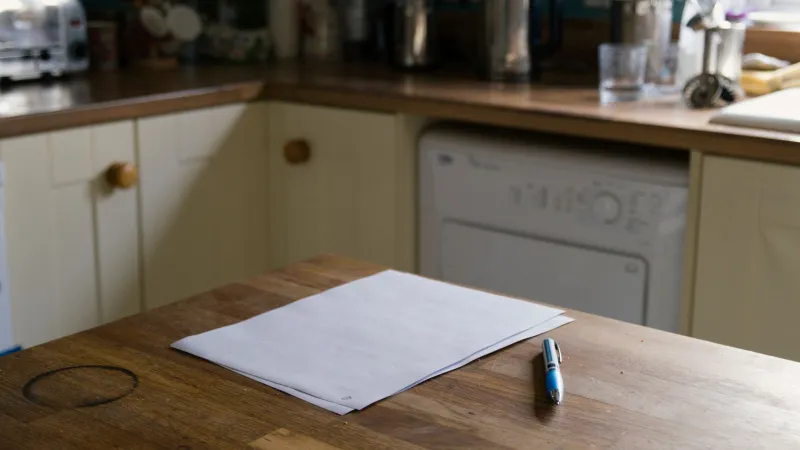
On a damp November morning in Honiton, the school run has a particular smell: wet leaves, bus diesel and the faint toastiness of a coat that has been drying by the radiator. Somewhere in the middle of it all, a parent is standing at the kitchen counter with a pen in one hand and a square of paper in the other. The lunchbox is open. The clock is doing that thing it does. And still, they write four words: 'Good luck today. Mum.'
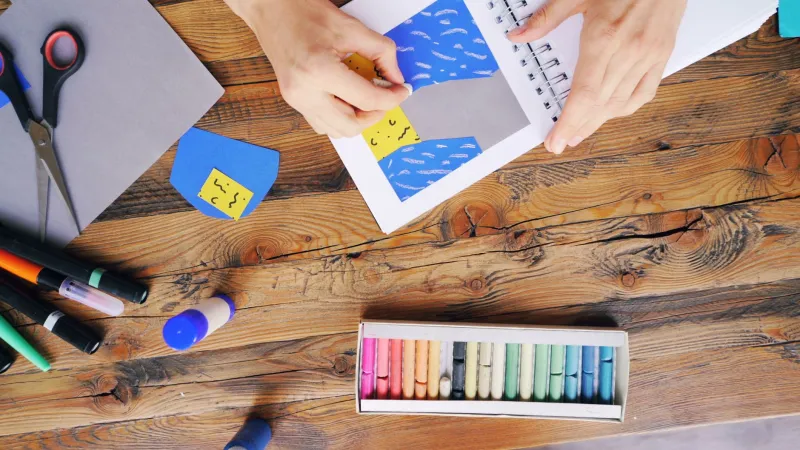
That is the whole ritual, really. No envelope, no stamp, no need to charge it overnight. Just a small square of paper that gets folded once, slipped under the sandwich box or into the side pocket of a school bag, and sent out into the day. At Honiton Paper Shop, we see the raw materials for this every week: slim notepads by the till, pre-cut cards in the drawer, pens that have been tested on the counter pad before they go home. It is one of the quietest things a paper shop sells, and one of the most useful.
The note that doesn't need to be a letter
A lunchbox note is not a performance. It does not need a beginning, a middle and an end. In fact, the best ones are usually shorter than a shopping list. 'Proud of you.' 'You've got this.' 'There's a biscuit in the tin.' 'I'll be at the gate.' Four or five words are plenty. The point is not the words themselves but the fact that someone thought about the shape of your day and put a hand to paper.
This is why the habit survives in an age of instant messages. A text arrives with a buzz and disappears into a thread. A note is physical. It gets unfolded at a plastic table, read twice, folded again, and sometimes kept in a blazer pocket until it goes through the wash. We have heard of notes that lived in pencil cases for a whole term. One customer told us her son still has a note from his nan in the back of his school reading record, though the reading record itself is now two years out of date. The note has outlasted the homework. That feels about right.
What to write when you've only got thirty seconds
You do not need to be a natural writer to do this well. You need a pen that works and a willingness to be a bit specific. 'Have a good day' is fine, but 'Hope the maths test is kinder than the practice paper' is better, because it shows you were listening. 'See you later' is fine, but 'I'll have the kettle on at four' gives the day a shape.
A few small rules of thumb, learned from the counter and the kitchen table:
- Keep it kind, not nagging. A note should be a small lift, not a to-do list in disguise.
- Be specific if you can. Mention the thing they were worried about, the friend they were meeting, the match after school.
- Use initials or a doodle if names feel too formal. A heart, a star or a terrible drawing of the dog all count.
- Write on something that folds easily. A stiff card can be lovely, but a soft notepad page sits flat in a lunchbox.
- Don't worry about neat handwriting. Nobody has ever framed a lunchbox note for its calligraphy.
A stash by the kettle
The secret to any good habit is having the bits within reach. We like the idea of a small note-writing station near the kettle: a pocket notepad, a pen that has been tested, a few pre-cut cards and a shallow tin or envelope for the finished notes. It takes up no more room than a tea caddy, and it means you are not rummaging through the kitchen drawer at 7.45am while the toaster goes cold.
At this time of year, a little stash also comes in handy for other things: a note in a partner's coat pocket before an early shift, a cheer-up line tucked into a packed lunch for a teenager, a 'well done' card for a neighbour who has finally got the shed sorted. The same supplies do all of it. A paper shop is, in a small way, a shop for sending people out into the world feeling a bit more noticed.
Notes for different ages
For younger children, a drawing often lands better than a sentence. A sun, a cat, a stick person holding a sandwich — all of it says the same thing. Reception and Year 1 notes can be one word and a sticker. If the lunchbox comes home with the note still in it, don't take it personally. It may simply have become part of the lunchbox's furniture.
For primary-age children, a joke or a tiny fact works well. 'What do you call a fish in a tie? So-fish-ticated.' It is not going to win a comedy award, but it will be read out at the table. For secondary school, keep it short and private. A note that is too gushing can be folded away very quickly. 'You'll be fine. Text me at lunch' is often exactly the right length. For adults, the coat pocket is underrated. A note left in a wallet or a handbag before a difficult meeting can do a surprising amount of work.
The local proof
We hear stories at the counter most weeks. There is the grandad who writes a silly joke every Friday for his granddaughter's packed lunch, and the mum who puts a note in her own lunchbox because her daughter started doing it for her. There is the teenager who said the best note she ever got was three words from her dad on the back of a bus ticket: 'You did enough.' And there is the quiet one about a customer who found an old note in a coat pocket after a bereavement, written by someone who had been gone for years. She did not want to talk about it for long. She just said it was nice to find a bit of their handwriting.
That is the thing about paper. It holds a moment. A note does not have to be profound to do that. It just has to exist, and then be found.
The return journey
One of the nicest parts of the lunchbox-note habit is that it often comes back. Not always, and not on demand, but often. A child learns to write one for a parent. A teenager leaves a folded square on the kitchen table. Someone tucks a 'thanks for the lift' into a coat pocket. The paper goes out, and a bit of it comes home.
So if you are standing at the counter this week, looking at the notepads and wondering whether it is worth it, take the small one. Take the pen that feels nice. Keep them by the kettle and write five words before the school run. It is a tiny thing to do on a November morning in Honiton, but it travels further than you think.