Counting the Border First: Notes from Honiton's Winter Puzzle Shelf
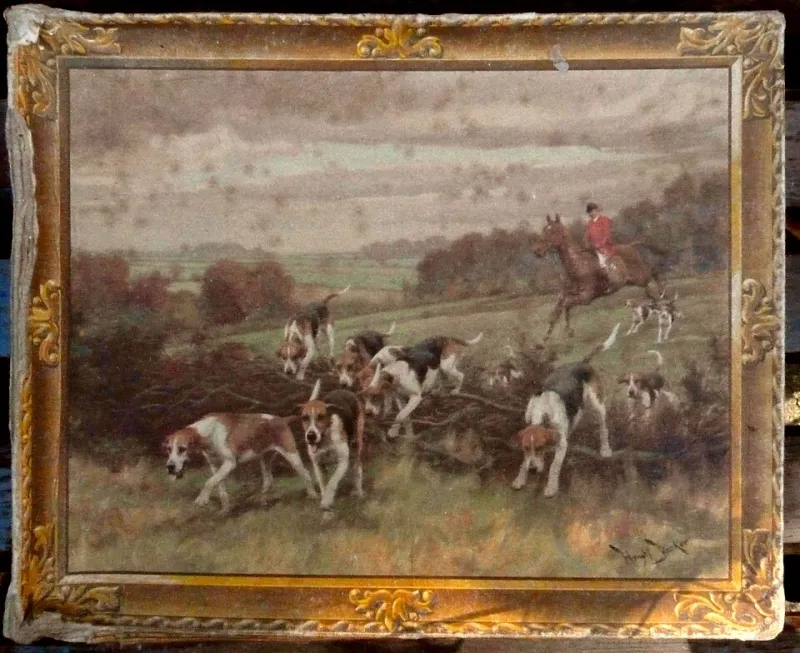
Photo: Wright Barker (d.1941), Public domain, via Wikimedia Commons
There is a particular sound a jigsaw box makes when it has been round the block a few times. Not a rattle exactly — more of a soft, settled shuffle, like a bag of rice being put down carefully. You hear it a lot on our shelf by the window, where the finished puzzles come back to us and go out again to somebody new. This is the closest thing Honiton has to a lending library for rainy evenings, and it runs on trust, a roll of tape and an honesty that would surprise anyone who thinks the High Street has gone cold.
The box arrives before the story does
People bring puzzles in the way other people return a casserole dish — slightly apologetic, keen to explain. "It's all there, I think. Well, we did it in the summer and there was one bit near the sky that we never found, but it might be under the sofa." That sentence, or a close cousin of it, is the true soundtrack of the swap shelf. Nobody wants to be the person who hands over a puzzle with a hole in it and says nothing. And yet nobody wants to be the person who admits it either, which is why so many boxes arrive with a small pencil note tucked inside the lid: one missing, top left, sorry.
That note is the whole etiquette in miniature. Keep the box honest and the shelf stays useful. A puzzle that quietly goes home with a stranger, gets tipped out, sorted by border and found wanting — that's how a good thing sours. So we ask, gently, and we write it on the lid in biro if we have to. 950 of 1,000. Sky section. It sounds like a weather report. It is, in a way: a small forecast of mild disappointment, delivered in advance.
Count the border first
If you take one habit away from this, make it the border count. Before you tip the pieces out properly, before you commit to the kitchen table for a fortnight, spread the edge pieces and count them. A 1,000-piece landscape should give you a border of 126 — corners counted once, no cheating. Come up short and you know what you're dealing with before the tea goes cold. It's not a rule anyone wrote down. It's just what sensible people do, like checking the box of eggs before you leave the shop.
And then there's the sorting. Some households are edge-pieces-first, methodical, bowls for colours. Others tip the lot out, put the kettle on and pick at it in a companionable sort of way, one piece at a time, for three weeks. Both are correct. The shelf does not judge.
The quiet social life of a shared table
What we didn't expect, when the swap shelf started, was the conversation. People linger. They lean on the counter and tell you about the one they've just finished — a Whitby harbour scene, a wall of jam jars, a Highland cottage with far too much heather. They ask what's good. They recommend. There is a woman who comes in most Thursdays and will not touch anything with more than 500 pieces because, as she puts it, "I'm not made of evenings." There is a retired teacher who does them in a weekend and brings them back with the pieces in little labelled bags, which is either magnificent or slightly alarming depending on your temperament.
Jigsaws have become, without anyone deciding it, a small social institution. Not loud. Not organised. Just a table by a window and a rotating cast of people who like to keep their hands busy while their minds wander. In November, when the light goes at half past four and the streetlights come on early, that is worth more than it sounds.
Cheaper company than almost anything else
The economics are quietly ridiculous. A decent 1,000-piece puzzle bought new will set you back somewhere between twelve and twenty pounds. Do it once, swap it, and the cost per evening drops to pennies. Compare that to a cinema ticket, a takeaway, an evening in a pub — there is no contest. For the price of one round of drinks you can be occupied, off your phone and slightly smug for a fortnight.
There's something else, too. A jigsaw is one of the few things you can do while talking, or while not talking. It suits people who find eye contact a bit much. It suits a household where two people want to be in the same room without having to fill the silence. It suits the long, dark stretch between Bonfire Night and the first proper frost.
Starting your own swap
You don't need a shop. You need a shelf, a box, a roll of tape and a little goodwill.
- Pick a home. A corner of a workplace kitchen, a church porch, the back of a village hall, a willing café. Somewhere dry, somewhere people pass.
- Write the rules on a card and stick it to the wall. Ours are barely a sentence: Take one, leave one if you can, label the box if a piece is missing. Keep it short or nobody reads it.
- Tape the box. Properly, along the seams, with the picture facing out. It stops the lid giving up and it stops pieces escaping into coat pockets.
- Be honest in biro. One missing piece, noted on the lid, saves somebody a very cross evening. It also makes everyone else more honest, which is the whole trick.
- Don't curate too hard. The slightly battered 1970s puzzle of a Cornish cove will be somebody's favourite. Leave it in.
Start small. One box becomes three by Christmas. By January someone is asking whether there's a swap for board games too, and you'll have to decide how far you're willing to take it.
In the meantime, the shelf is here by the window, and the nights are long. Come and count the border first.